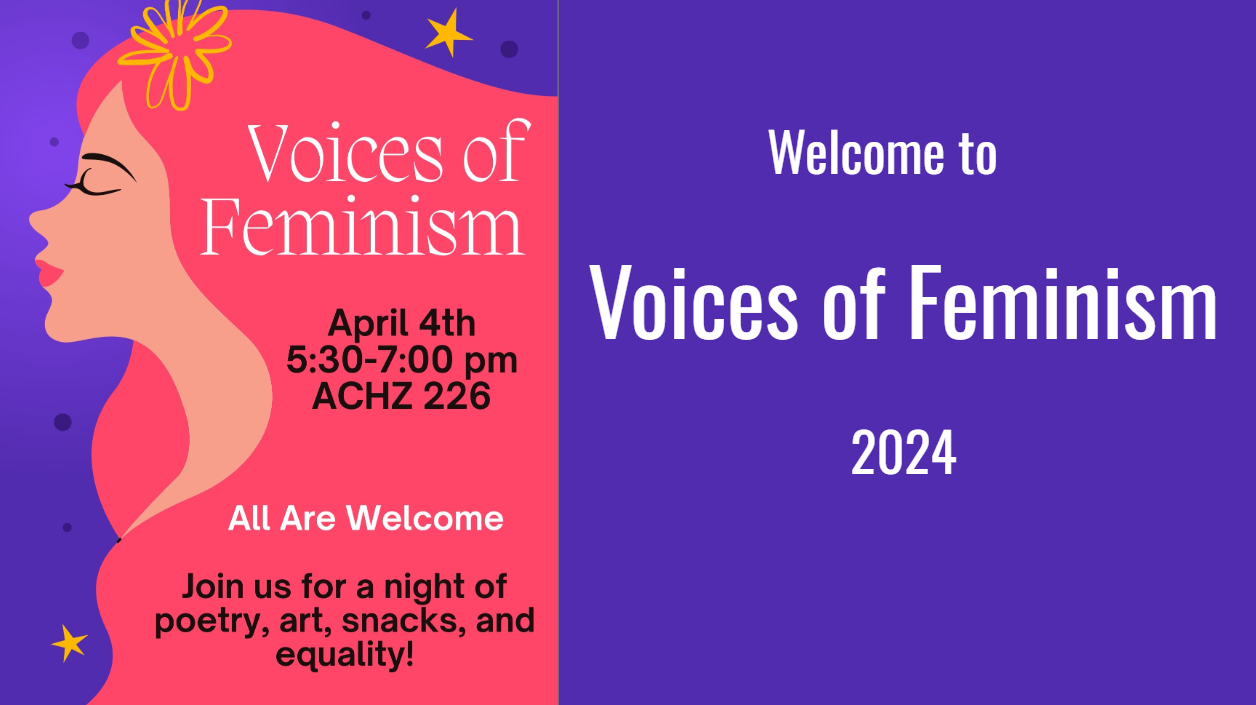
The following is adapted from a speech I gave at Voices of Feminism on April 4, 2024 in Fort Wayne, Indiana.
Welcome to Voices of Feminism 2024. While this specific event has always occurred in March to celebrate Women’s History month, I wanted to defiantly offer it in April to demonstrate that these conversations don’t just need to happen in response to a specific month. These issues and complexities affect us all–all year long.
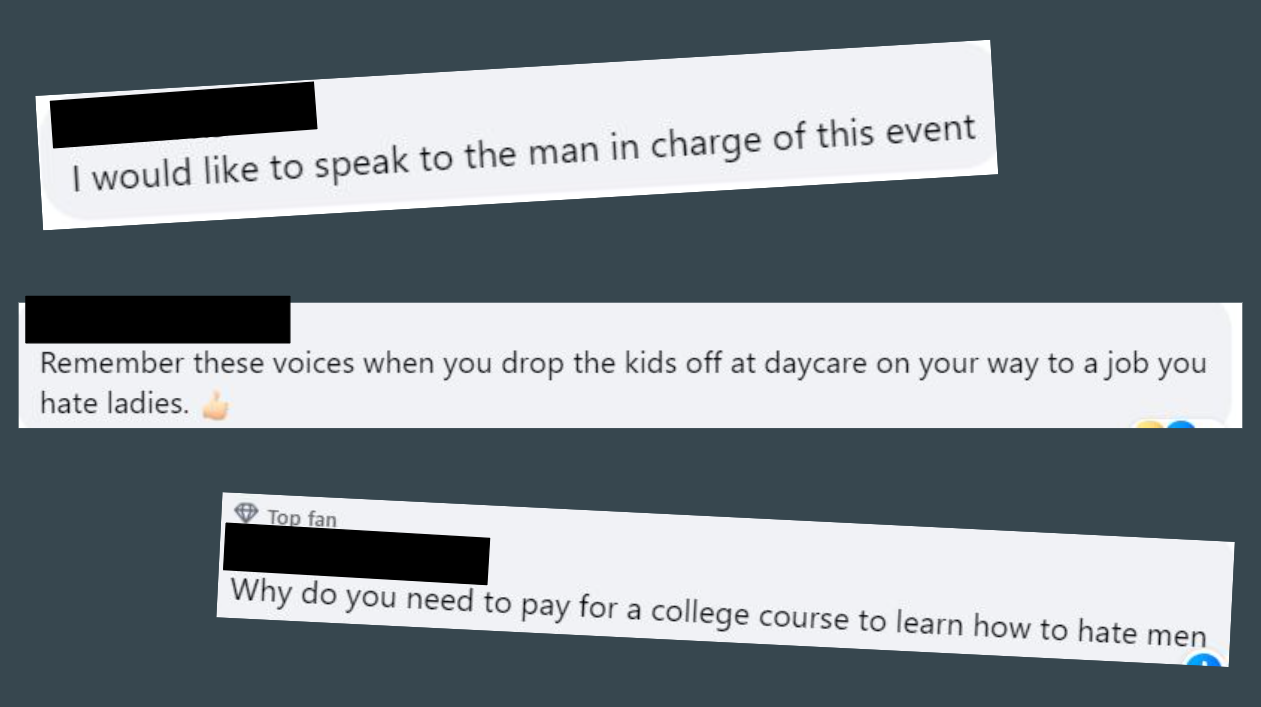
Gender equality is the idea that men, women, and non-binary individuals should have equal rights, opportunities, and treatment under the law and society. At its core, this is a simple idea. Feminism is not a controversial topic on its own. Last year in my opening thoughts, I spoke to you on why gender inequality was still such a global concept and how gender stereotypes work to limit both men and women. Tonight, inspired by the comment section of a Wane TV posting for this event, I’d like to talk briefly about the misconceptions surrounding feminism.
[Chelsie showed disparaging comments about the event from a local news site]
Feminism, like any ideology or movement, is subject to misconceptions, some of which can be quite pervasive: If I’m a feminist, I hate men. If I’m a feminist, I’m automatically political or I have radical thoughts. If I’m a feminist, I must be a woman. If I’m a feminist, I must reject traditional gender roles and any woman who chooses them. I probably actively ignore men’s issues..there’s no way I can be Pro-life, and If I’m a white feminist, I don’t care about intersectional feminism.
My guess is that you were able to recognize at least one of these misconceptions. We need to ask ourselves when did “feminist” become a dirty word? Feminism… is not a controversial idea on its own.
Ultimately, feminism is important because it promotes fairness, dignity, and respect for all. It envisions a world where everyone has the opportunity to thrive and fulfill their potential, free from the constraints of gender-based discrimination and oppression. As someone else in the comment section of the Wane TV post reminded me, it has only been 50 years since women could open a bank account without a man’s signature. While that sinks in, I will remind you one final time that feminism is not a controversial topic on its own. So, how do we fight the misconceptions?
We need to provide accurate information about feminism through schools, community organizations, workshops, and even our conversations with one another.
We need to encourage critical thinking and media literacy skills to help people recognize and challenge stereotypes, biases, and misrepresentations of feminism in the media.
We need dialogue and engagement–to foster open and respectful dialogue about feminism in various settings, creating opportunities for people to ask questions, share their perspectives, and engage in constructive conversations about gender equality and feminism.
We need to use art, literature, music, film, and other forms of cultural expression to challenge stereotypes, amplify marginalized voices, and promote feminist perspectives.
This evening has been built to offer different types of stimuli with these four goals in mind. You will hear different voices tonight as volunteers come up here to read feminist works. Embedded within each act, you will also hear from a featured presenter, using her own voice to bring context to specific ideas. In the planning of this event, I want to give a specific shout out to one of our very own students, Reese Rosario, who agreed to curate a lot of the art you will see tonight as backdrop for the readings.
I want to thank each of you for your willingness to contemplate and celebrate the work of feminist poets, artists, and ideas by spending time here. This evening is important. We cannot fix the misconceptions that surround the term “feminism” in one evening–but we can bring awareness and depth to the discussion of it. We can pause long enough to embrace our shared humanity and the goal of equality. Please enjoy the program, thank you.